
I led the UX design and strategic alignment for a massive banking transformation project spanning three platforms. Which required a unified UX strategy, component-level alignment, a new design system, and full coordination across siloed teams. I worked across departments to map critical use cases, define user types, and unify task flows.
Lead UX Strategist & Designer
+2 years
Web
Rebuilding a legacy banking system from the ground up, unifying three disparate operational
platforms (Remote Sales, Telephonic Support, Physical Branch) into a cohesive, user-centric
ecosystem.
The core challenge was aligning multiple, independent product teams with varying
priorities and technical stacks to deliver a seamless, secure, and efficient experience for
diverse user types (agents) and customers.

Several rounds and iteration of the following research methods were applied during the course of building the banking system.
I conducted extensive stakeholder interviews across product teams, channel teams, agents and clients to understand:
Through user interviews and observational studies, we identified 8 distinct user profiles requiring 4 different permission levels, with complex role-switching capabilities between physical and remote environments.
The team in the period of first releases completed more than 14 rounds of user testing, with over 300 candidates. 23 Call centre & branch visits for task shadowing. Uncovering insights such as the high cognitive load in switching between product flows and sytem to fulfill tasks and the burden of not having a centralised source of customer information.

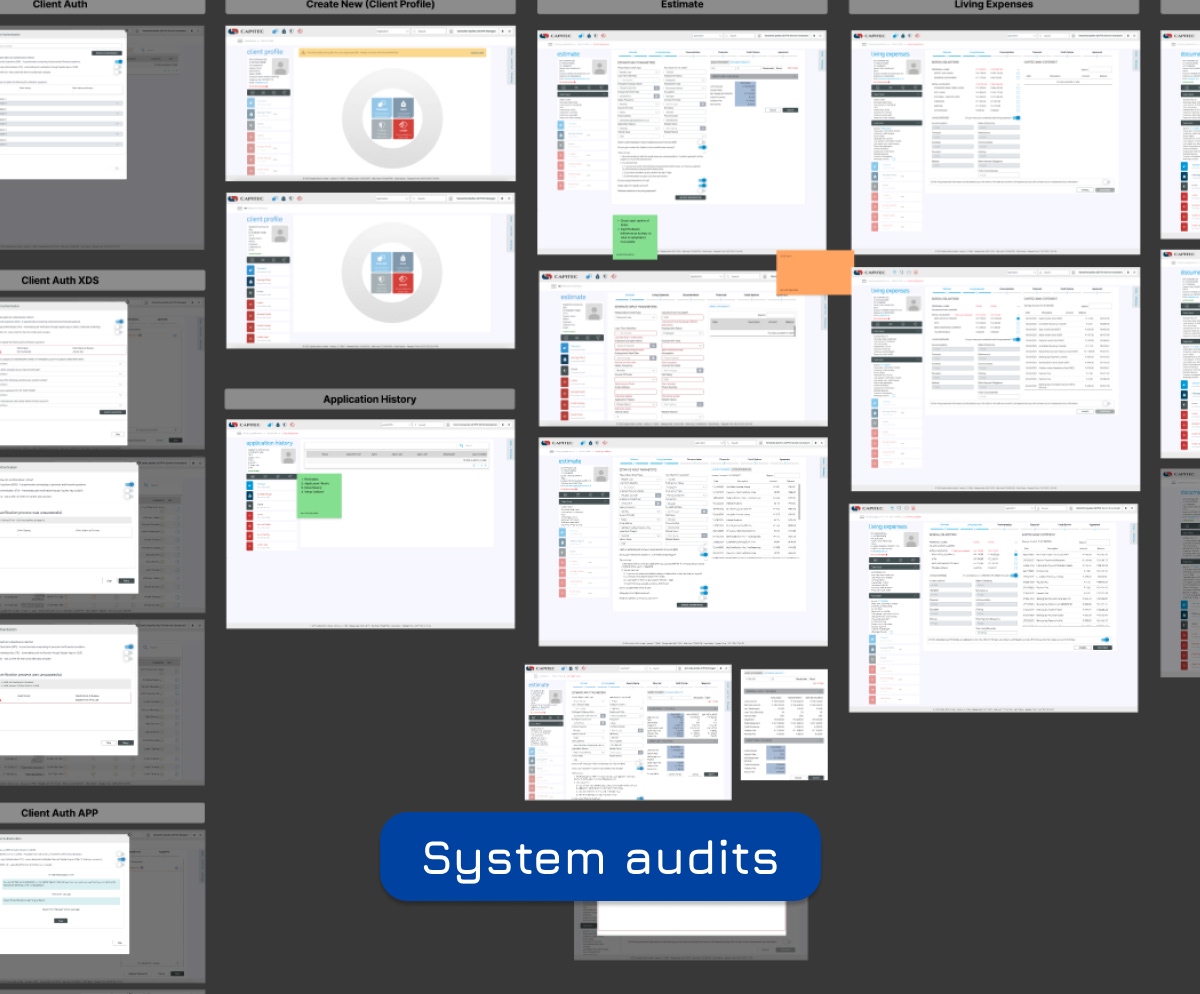
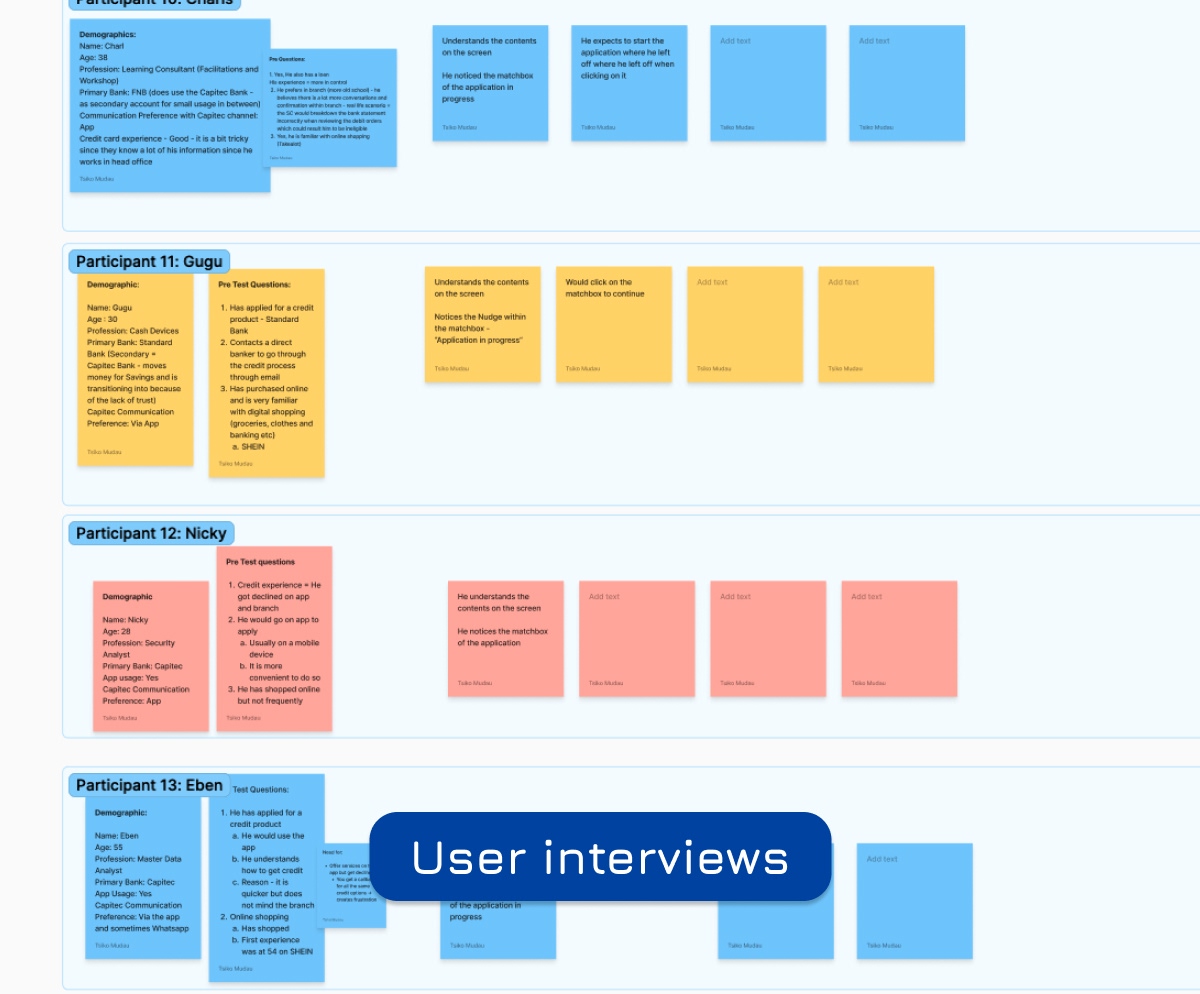
UX Vision: To create a cohesive, efficient, and secure omnichannel platform that enables agents to deliver consistent client service regardless of location (remote/branch), with AI-enhanced tools and seamless backend integration.
This project demanded a deeply strategic and collaborative approach beyond traditional UX design, my role required me to be part of delivery strategy and give steer on the system build across the organization. To frequently liase with product, engineering, legal, marketing, service / support and architects to align on delivery approach and standards. My contributions focused on:
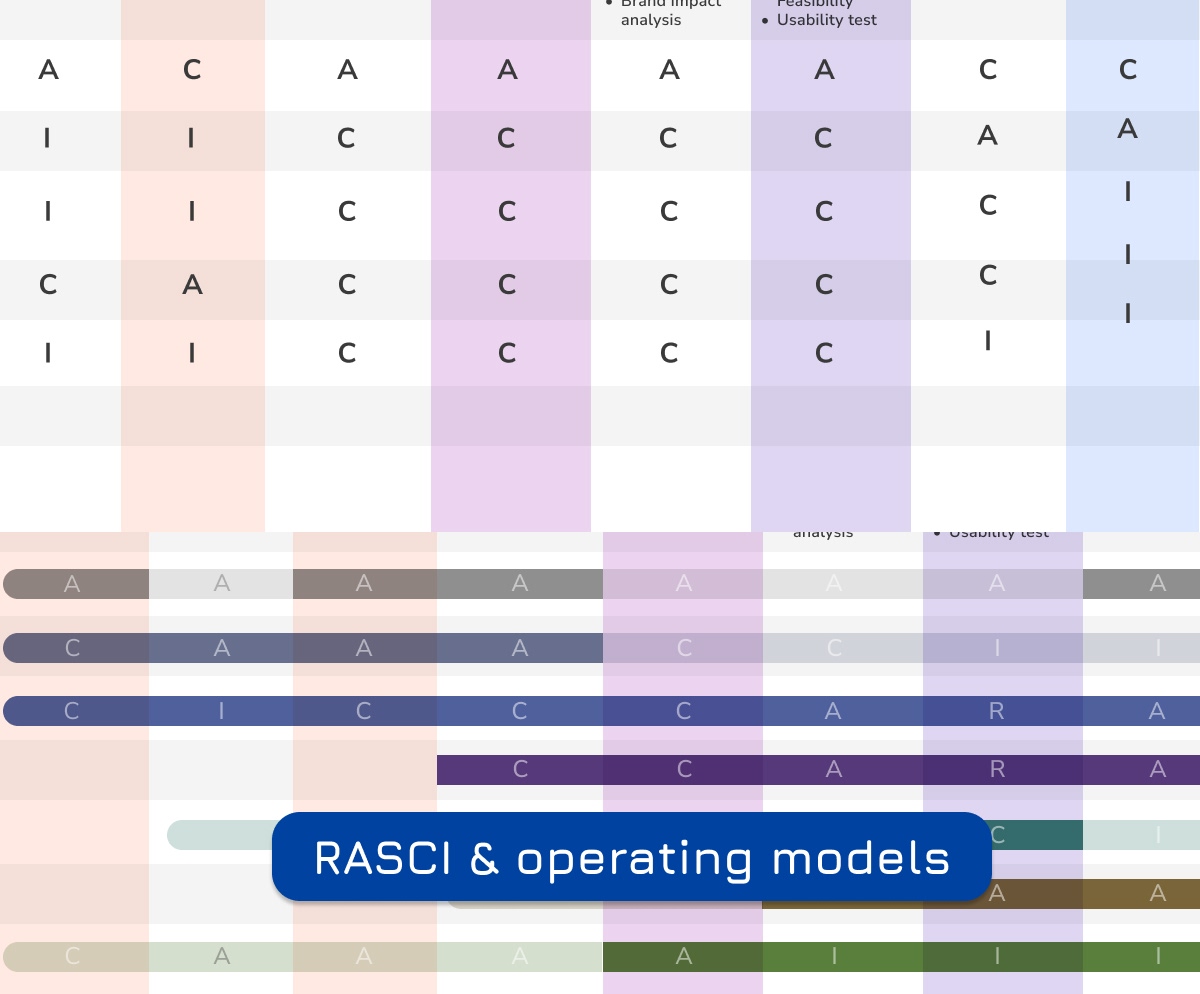
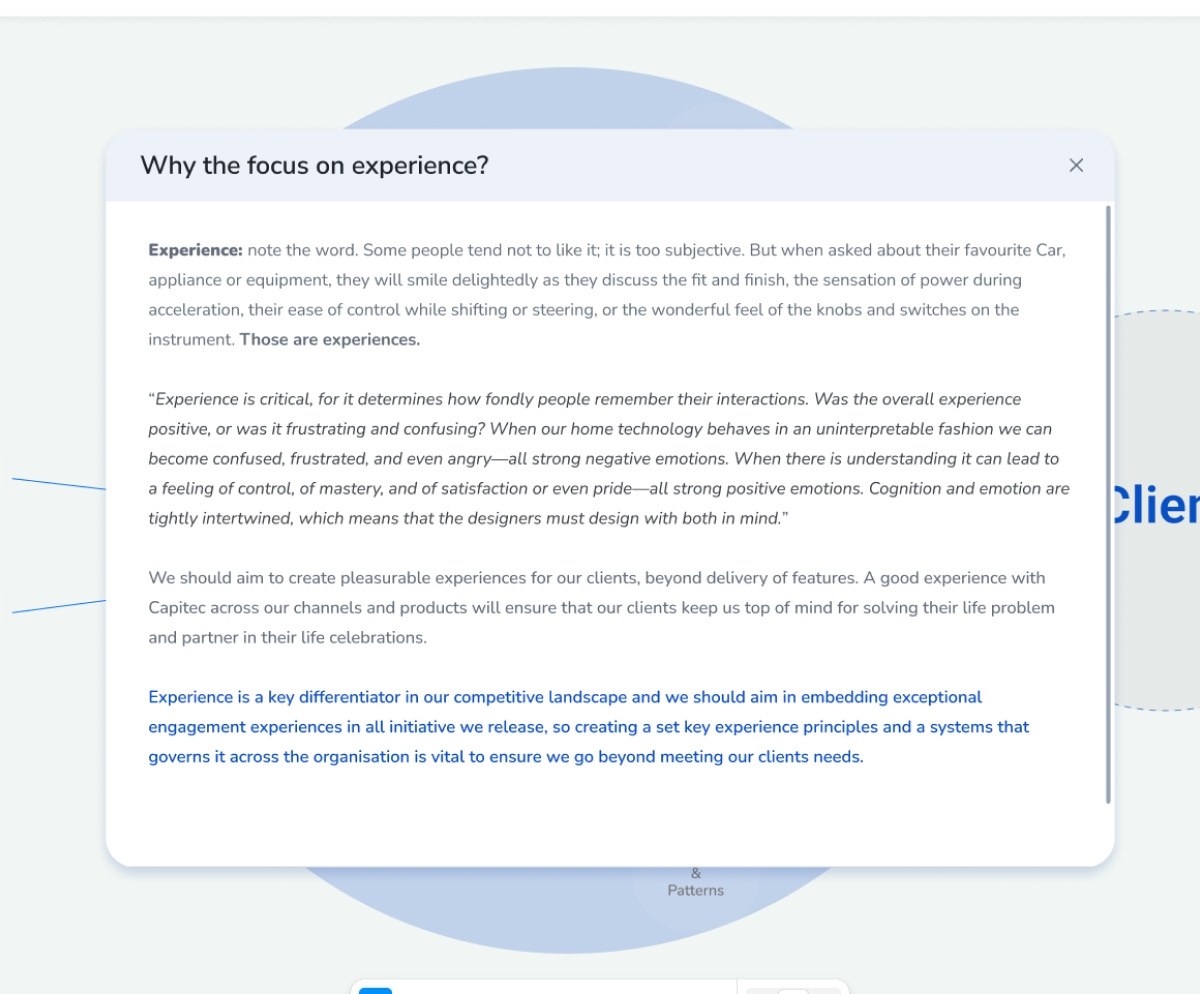
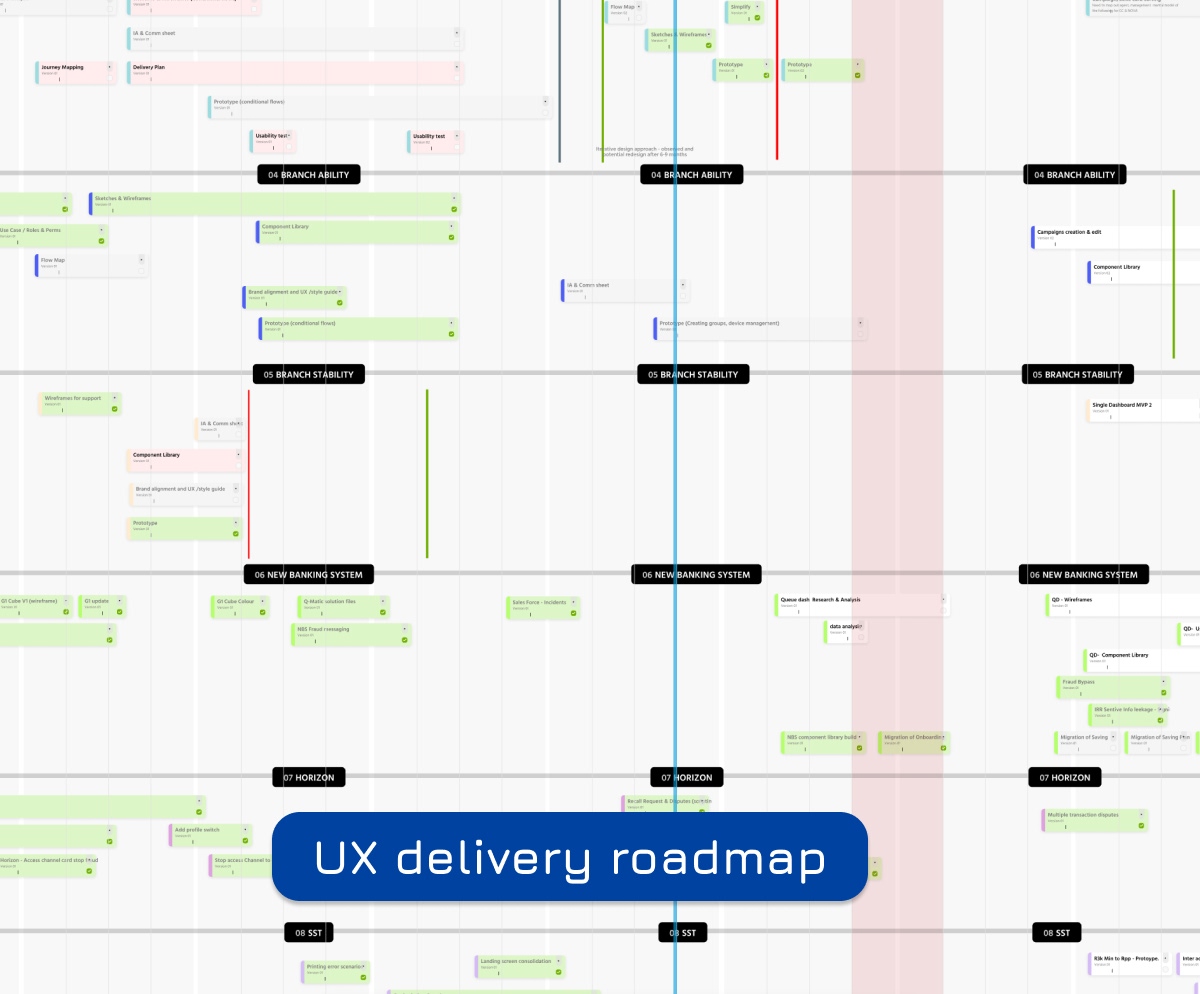
After iterative research and analysis phases, a large section of the project would be to build, populate, update and align with certain living artefacts for a teams to use.
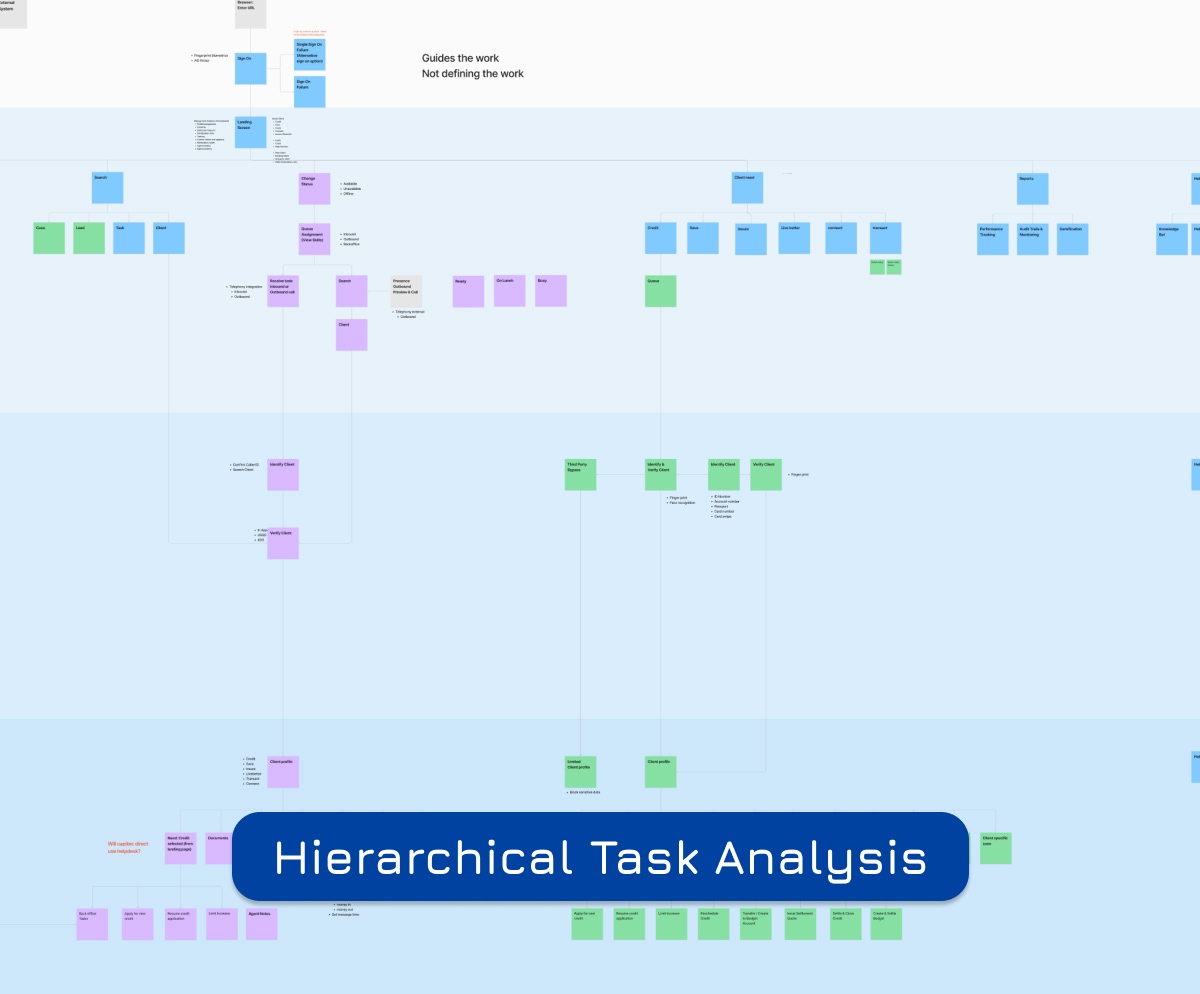
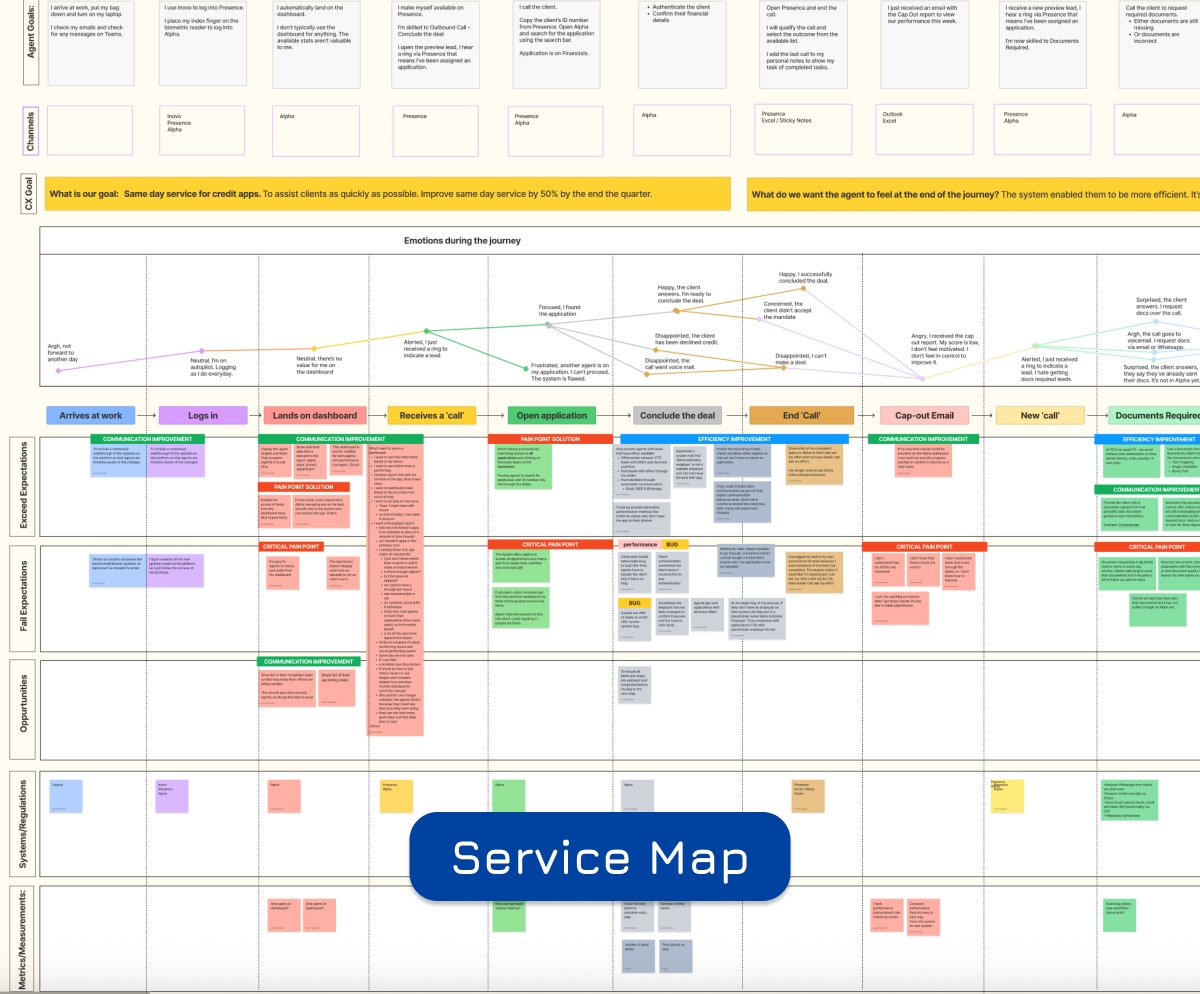
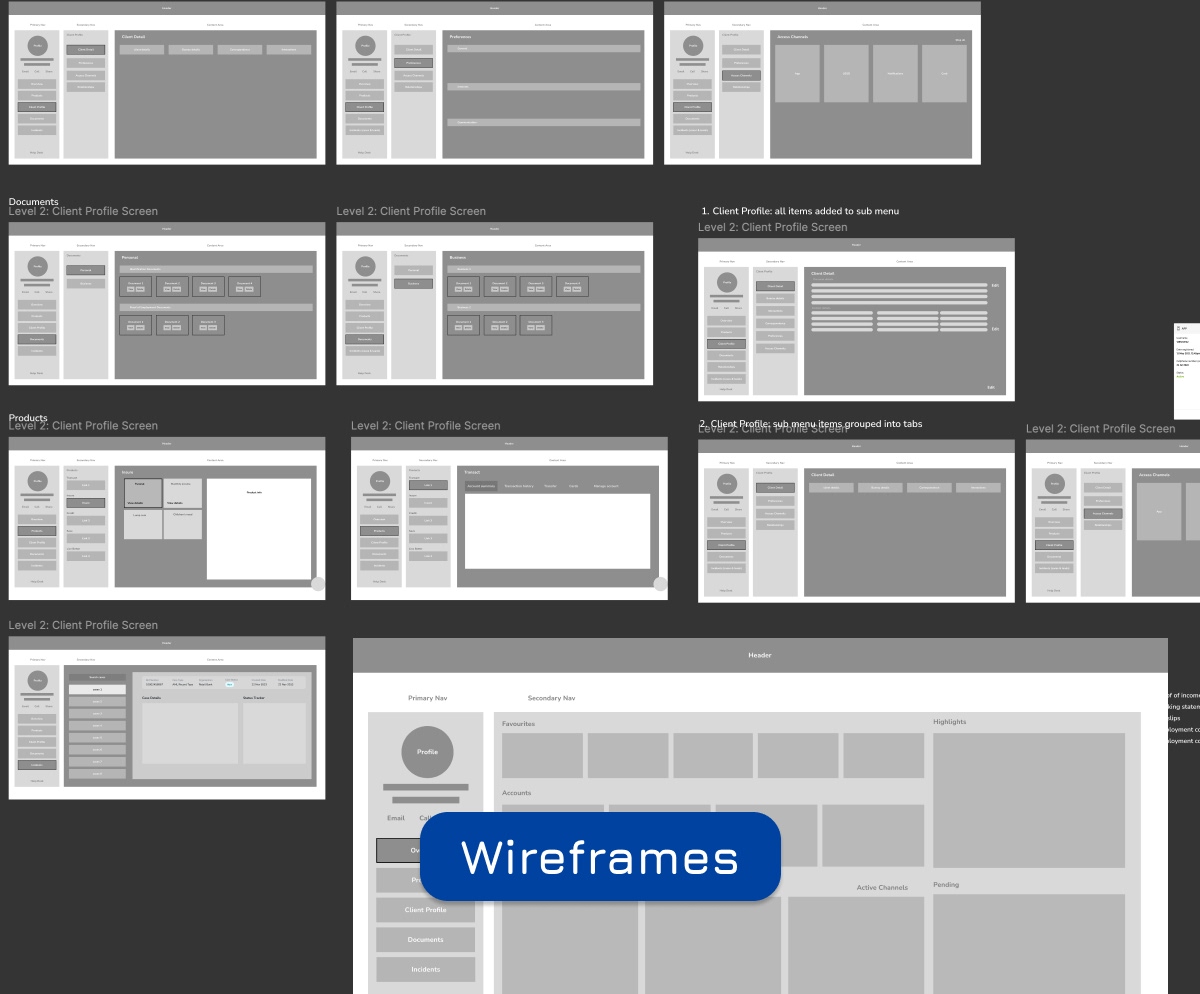
Building a new platform required design solutions for countless features, some new and others optimised with new industry standards and availability of new technology. Here are a few areas looked at:
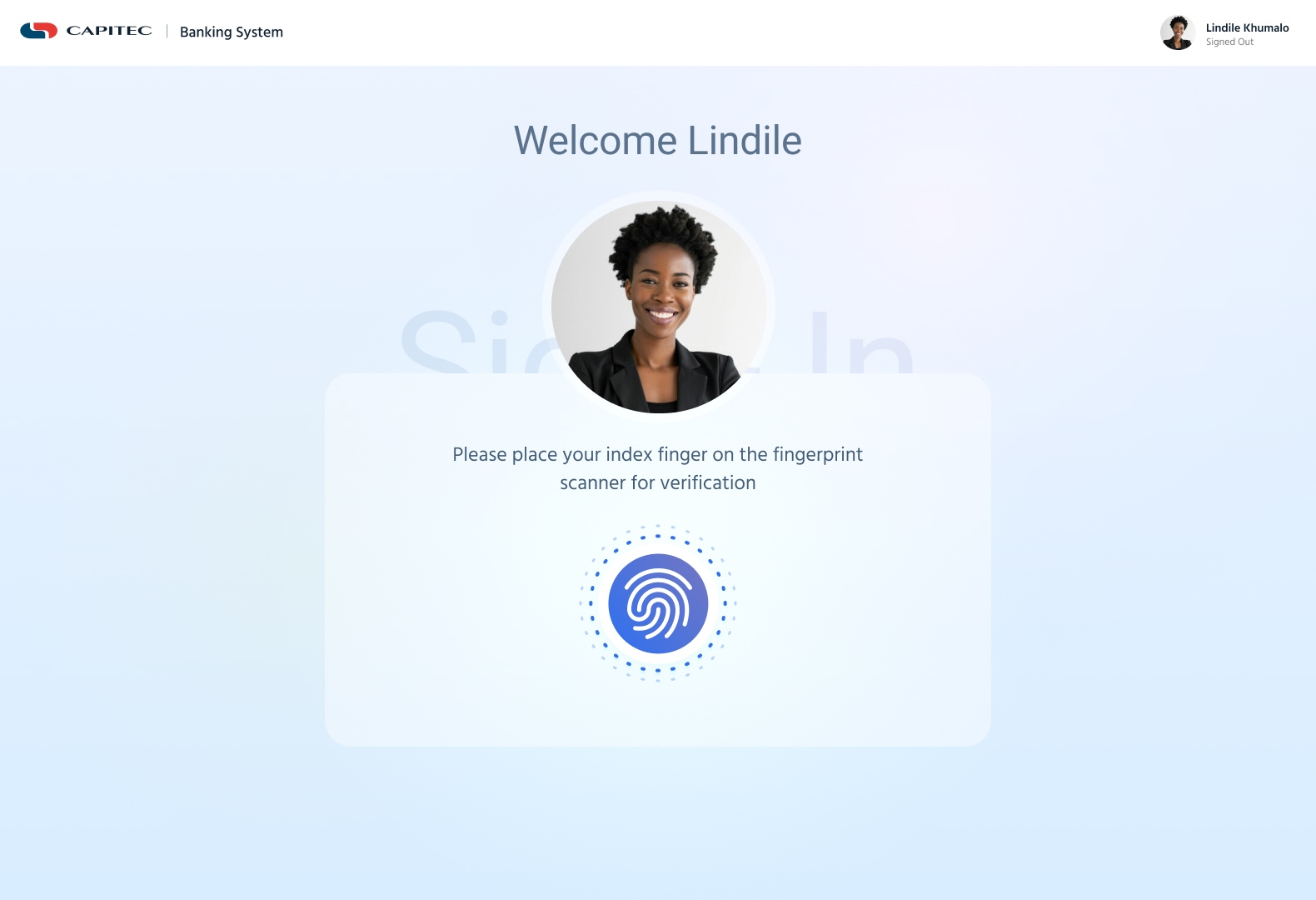
Problem: Complex security requirements with biometric verification and session management, both to secure agent and client access.
Solution: Designed streamlined fingerprint-based sign-on with SSO integration, ensuring only verified agents could access the system and customer data while maintaining audit trails.
UX Innovation: One-agent-per-machine policy with visual indicators for session ownership and seamless handoff protocols. Agent #A is unable to log into the banking system application, until they sign user #B off the machine and login with their own details, before logging into the application.
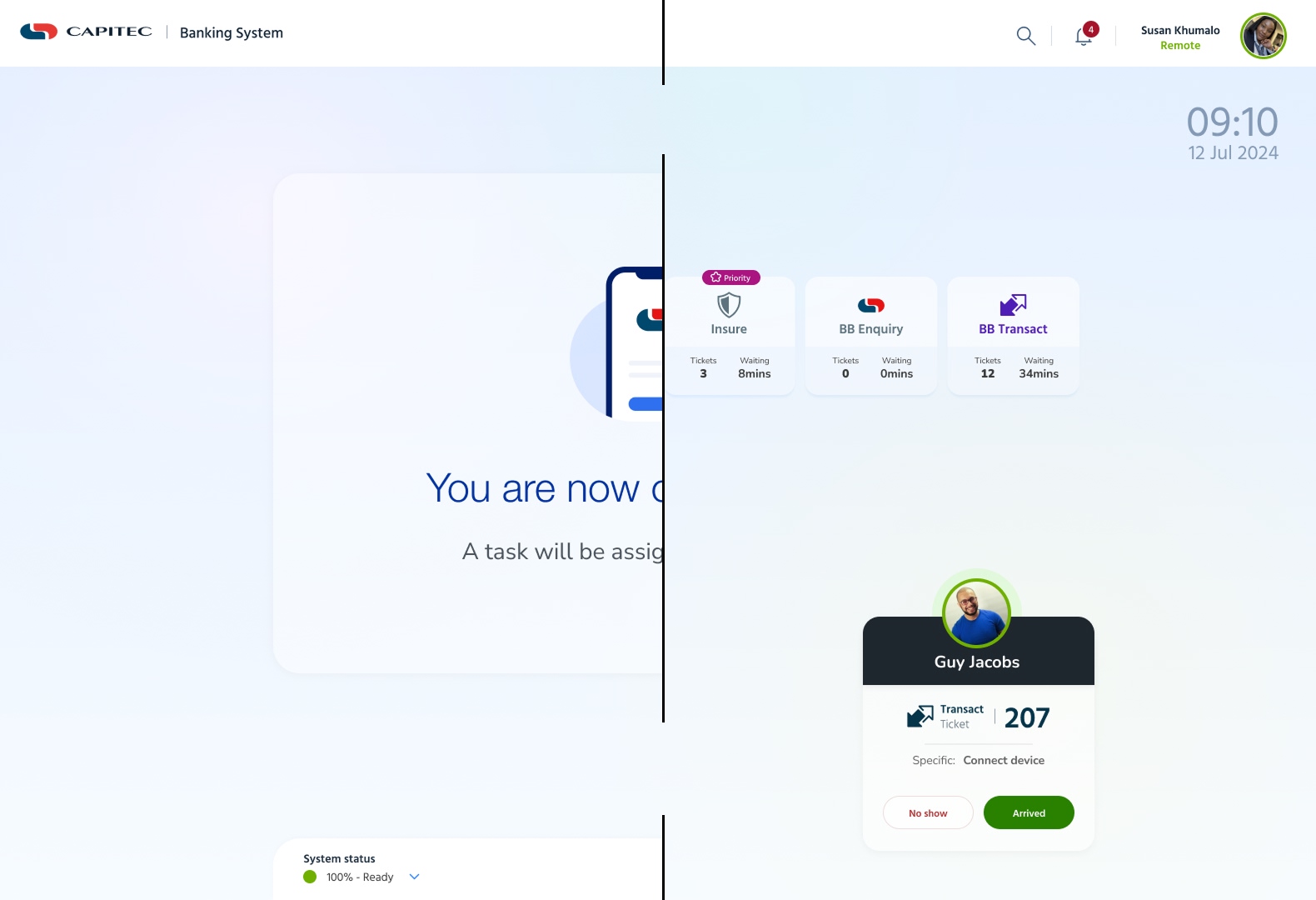
Problem: Different user needs between remote (Sales & Support) and physical (generalist) agents. Different features and prirorities.
Solution: Created role-specific landing pages with contextual information architecture. Where remote agents are presented with dahsboard that suit their skill sets with visibility into cross-functional activities as well physical agents having access to more features being a generalist role.
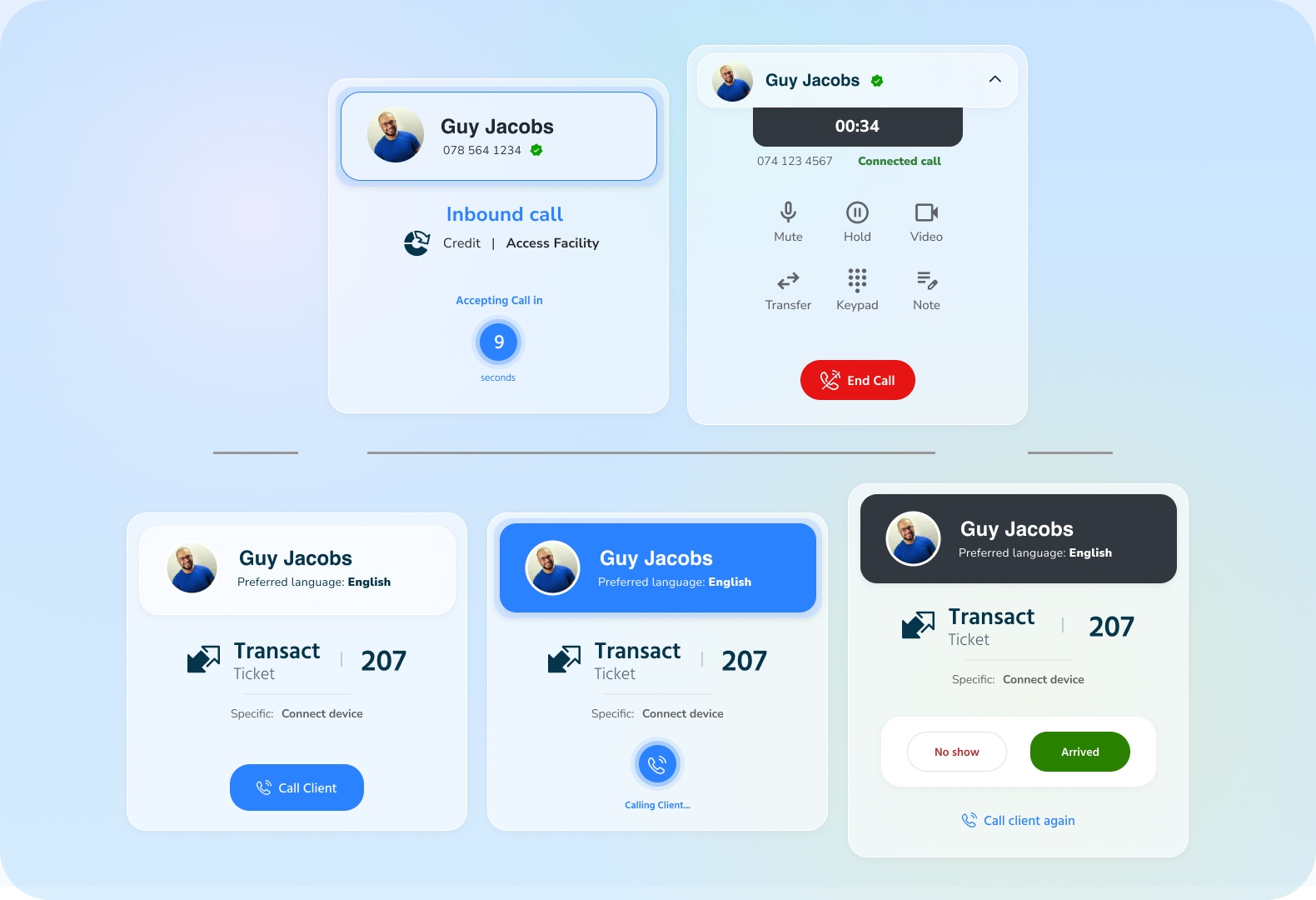
Problem: Historical inefficiencies with agents selecting their own tasks, leading to conflicts and errors.
Solution: Implemented intelligent task distribution system with customer continuity features.
Key Innovation Research shows that both users liked working with the same agent and agent are more productive and motivated on tasks they are familiar with. AI ensures returning customers are routed to their previous agent, while new tasks are distributed based on agent availability and expertise.
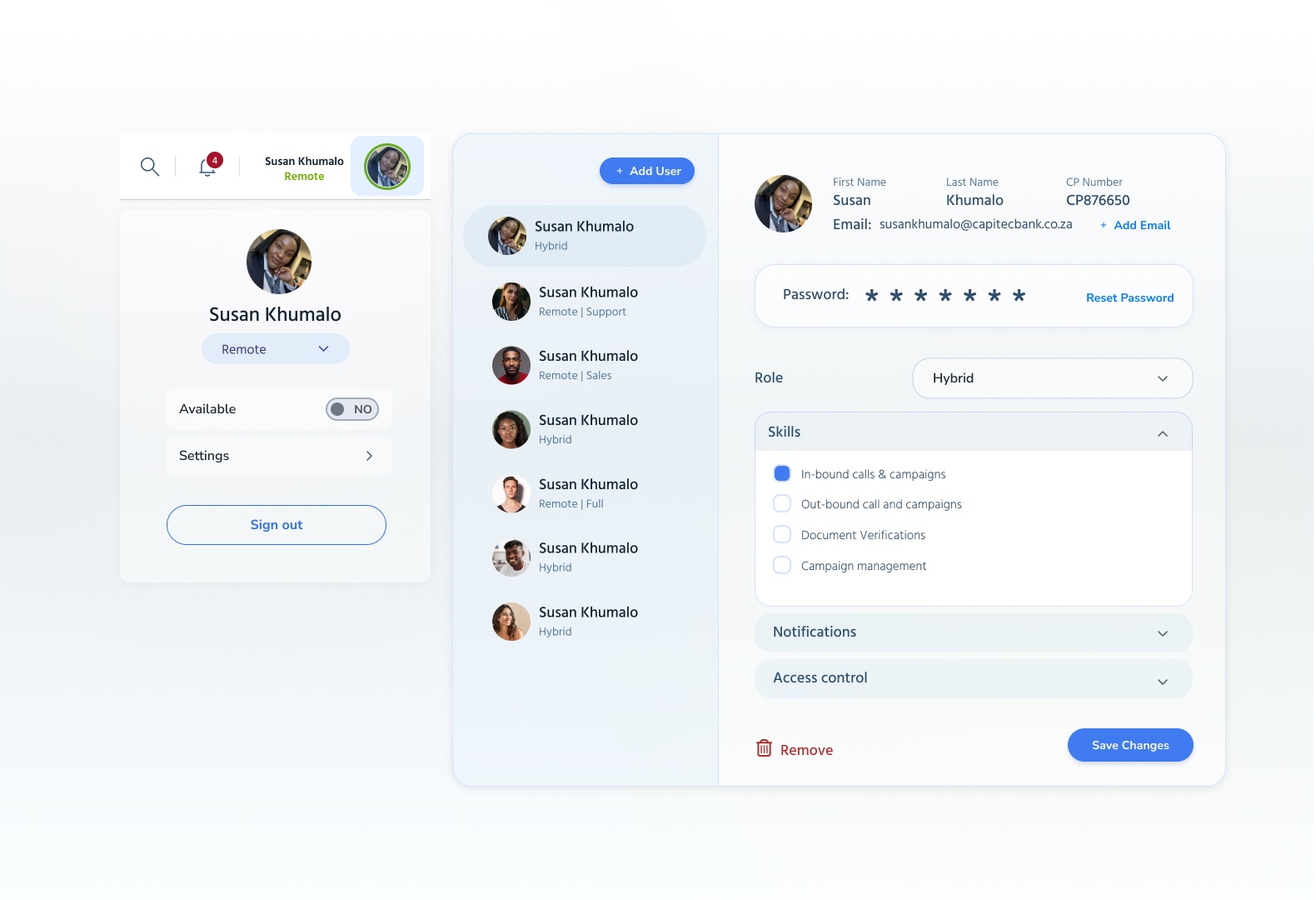
Insight User research revealed complex permission structures, 3 systems had multiple user roles, each served different function, with different hierarchical labels and permissions.
Solution: Created flexible role management for the entire system and summarizing into the following.
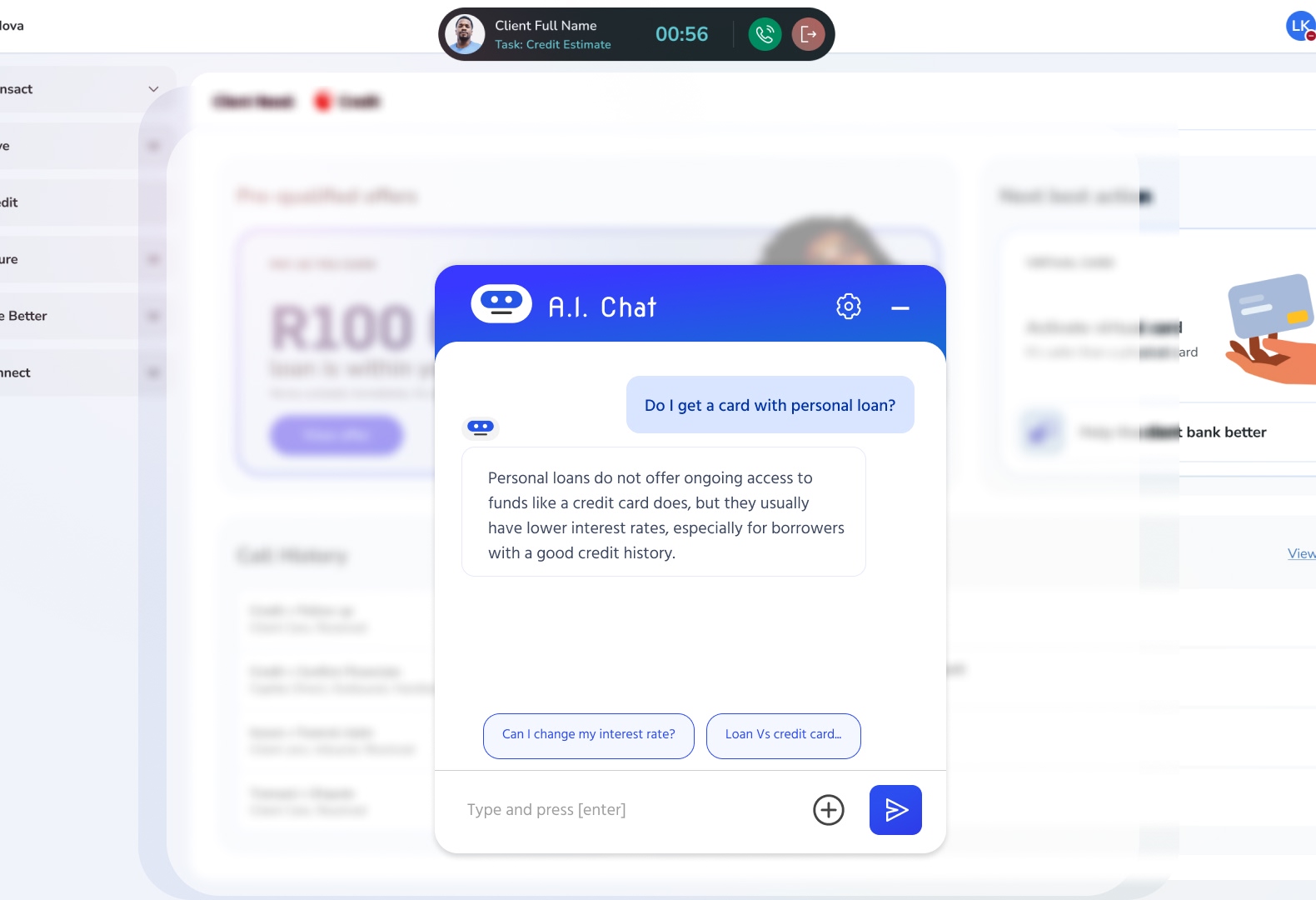
Problem: Growing product portfolio requiring consistent sales processes across mutltiple product types and with the merger of 3 systems, it would be impossible for agents to specialize in all product and research showed that customers usually had contextual user inquiries about products and expected agents to be experts on the subject matter at hand.
Solution: We introduced an AI information support, which was easily accessible and dynamic in size and placement.
Established weekly review sessions and created shared prototyping standards to ensure alignement across all product and engineering teams and prevend redundant work.
Created high-fidelity prototypes serving as the single source of truth for all stakeholders & engineering teams, reducing miscommunication and ensuring consistent implementation across platform.
Implemented design review checkpoints with development teams to maintain design system compliance and interaction standards throughout the development process.
Facilitated discussion and mediated conflicts between component library preferences across teams. Got key stakeholder buy-in on best engineering approach to meet our collective goals.
1 - Cross-Team Collaboration: The importance of establishing shared design standards early in the process cannot be overstated. Regular alignment sessions and prototype-driven development were crucial for managing complexity across multiple teams.
2 - User-Centered Security: Balancing stringent security requirements with user experience demands creative solutions that make security measures feel seamless rather than burdensome.
3 - Scalable Design Systems: Building design systems that work across different technical implementations requires deep collaboration with engineering teams and flexibility in design execution while maintaining visual consistency.
 GRM Design